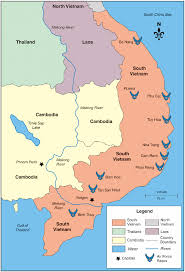
Vietnam Herbicide Ops

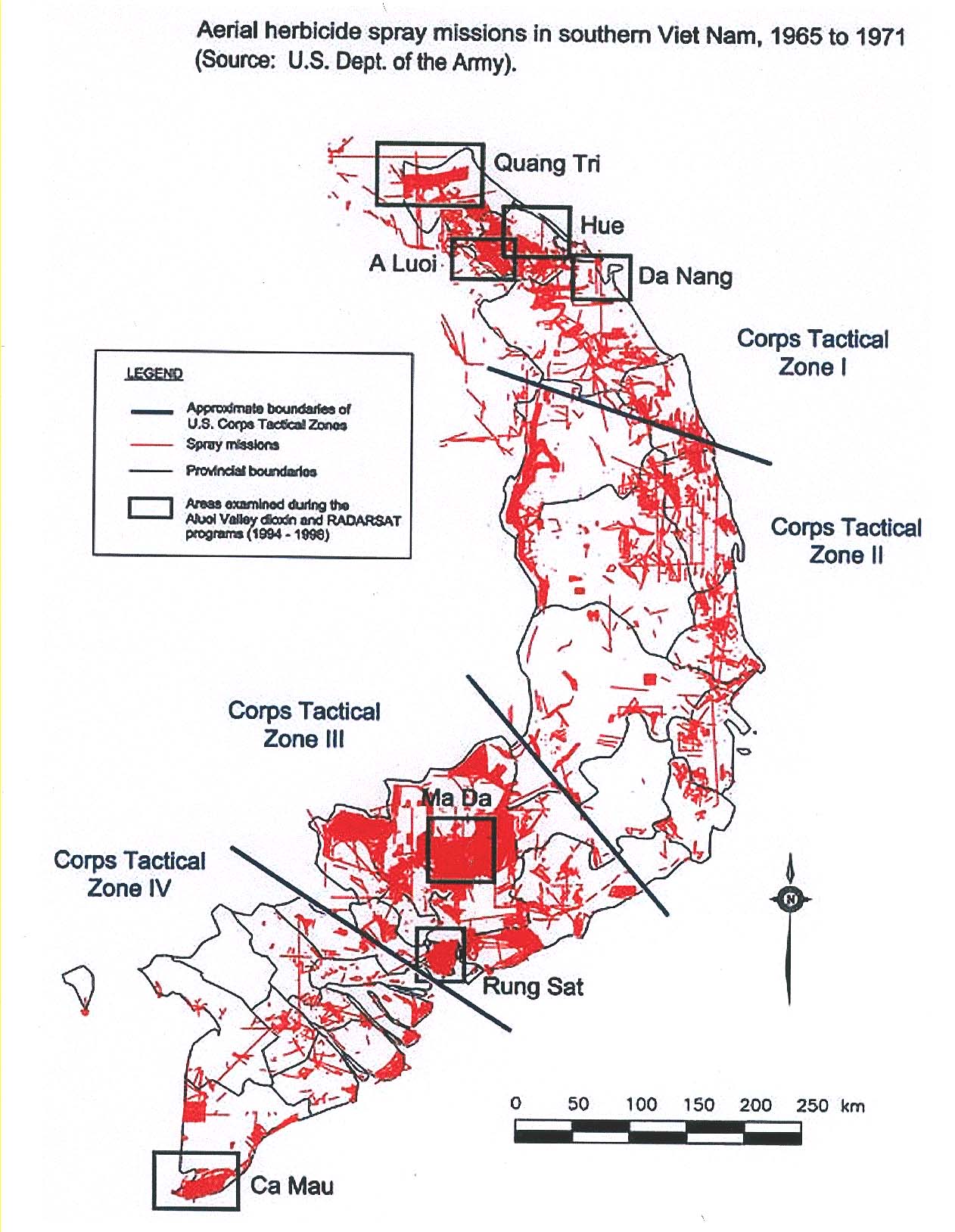
196119661971
Intensity Detailed
Data Source: HERBO-2 (NASV) Parsed
Strictly excludes modern environmental data.

Herbicides Used

Agent Orange

A mixture of two herbicides (2,4-D and 2,4,5-T). It was the most widely used herbicide during the war.

Primary purpose: Defoliation of forest cover to deny cover to enemy forces.

Contained traces of TCDD (dioxin), a highly toxic compound linked to severe long-term health issues and environmental contamination.

Agent White

A mixture of 2,4-D and picloram. Used when Agent Orange was not available or near sensitive crops.

Purpose: Defoliation and forest degradation. Persisted in soil longer than Agent Orange.

Did not contain dioxin, but picloram is persistent in the environment.

Agent Blue

An arsenic-based herbicide (cacodylic acid). Unlike Orange and White, it killed plants by desiccation.

Primary purpose: Crop destruction (rice) to deprive enemy forces of food supplies.

Arsenic is toxic and persists in the soil, posing long-term agricultural risks.

How Spraying Was Conducted

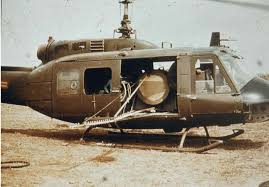
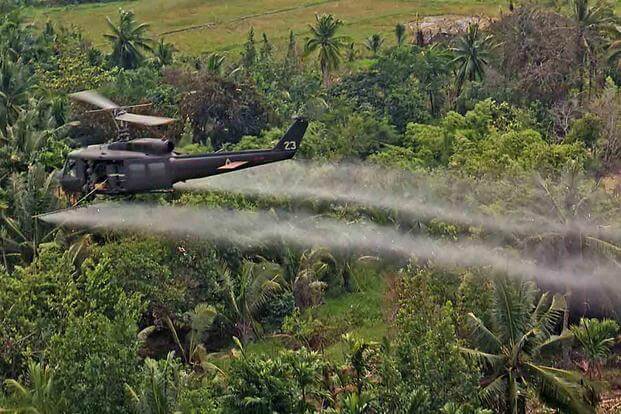
Aerial spraying was the primary method of delivery, consolidated under **Operation Ranch Hand**. The primary aircraft used was the **Fairchild C-123 Provider**, equipped with specialized spray tanks. Helicopters and ground-based trucks, and even backpacks, were also used for smaller-scale or perimeter operations around bases.
Health & Environmental Consequences

Historical Context

From the early 1960s to early 1970s, the U.S. military employed herbicides as part of a strategy to remove forest cover and destroy food crops used by the North Vietnamese Army and Viet Cong. This environmental warfare tactic aimed to improve visibility for military operations and disrupt enemy supply lines.

Data & Methodology

Library / Recommended Reading

Agent Orange: History, Science, and the Politics of Uncertainty

Agent Orange: History, Science, and the Politics of Uncertainty

Edwin A. Martini

The most in-depth work on the political and scientific controversies surrounding defoliants.

View on Amazon
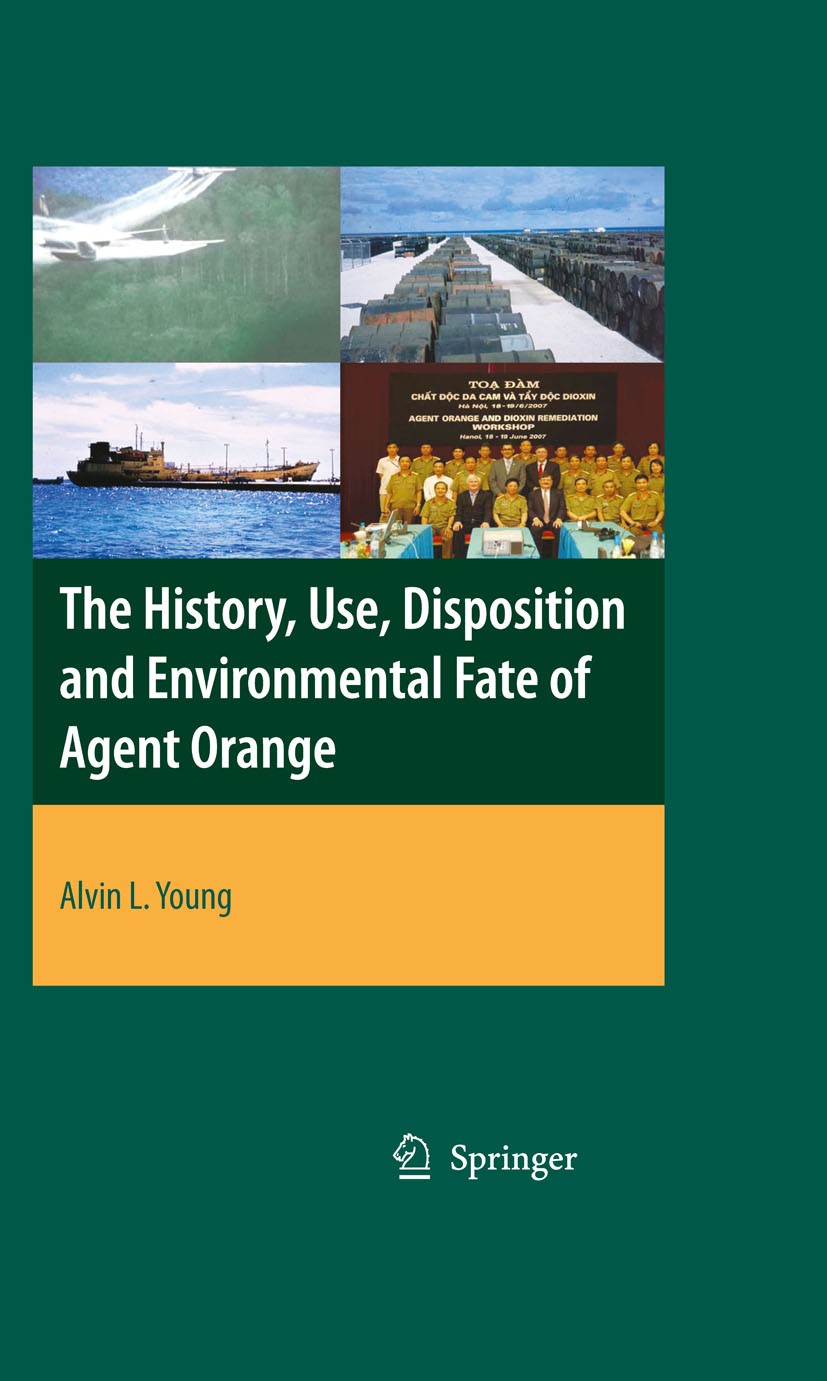
The History, Use, Disposition and Environmental Fate of Agent Orange

The History, Use, Disposition and Environmental Fate of Agent Orange

Alvin L. Young

Technical and historical analysis by the leading expert on the topic.

View on Amazon
Footprints of War: Militarized Landscapes in Vietnam

Footprints of War: Militarized Landscapes in Vietnam

David Biggs

How war and chemistry changed the landscape of Vietnam; perfectly complements the map.

View on Amazon
More books on Amazon

More books on Amazon

Various Authors

Browse more titles related to Agent Orange and the Vietnam War.

View on Amazon
As an Amazon Associate I earn from qualifying purchases.

Sources & Further Reading